

Volume 35, Issue 253 (1-2026)
J Mazandaran Univ Med Sci 2026, 35(253): 65-77 |
Back to browse issues page



Download citation:
BibTeX | RIS | EndNote | Medlars | ProCite | Reference Manager | RefWorks
Send citation to:


BibTeX | RIS | EndNote | Medlars | ProCite | Reference Manager | RefWorks
Send citation to:
Abbasifard M, Pakzad Moghadam S H, Bazmandegan G, Kermani Nejad A H, Mehdizade Tehrani A, Abbasi M et al . Effect of Airway Pressure Release Ventilation on Pulmonary Function and Oxygenation in Patients with Severe COVID-19. J Mazandaran Univ Med Sci 2026; 35 (253) :65-77
URL: http://jmums.mazums.ac.ir/article-1-21723-en.html
URL: http://jmums.mazums.ac.ir/article-1-21723-en.html
Mitra Abbasifard 
 , Seyed Hamid Pakzad Moghadam , Gholamreza Bazmandegan , Amir Hossein Kermani Nejad , Arefeh Mehdizade Tehrani , Mohadeseh Abbasi , Zahra Kamiab
, Seyed Hamid Pakzad Moghadam , Gholamreza Bazmandegan , Amir Hossein Kermani Nejad , Arefeh Mehdizade Tehrani , Mohadeseh Abbasi , Zahra Kamiab
Abstract: (30 Views)
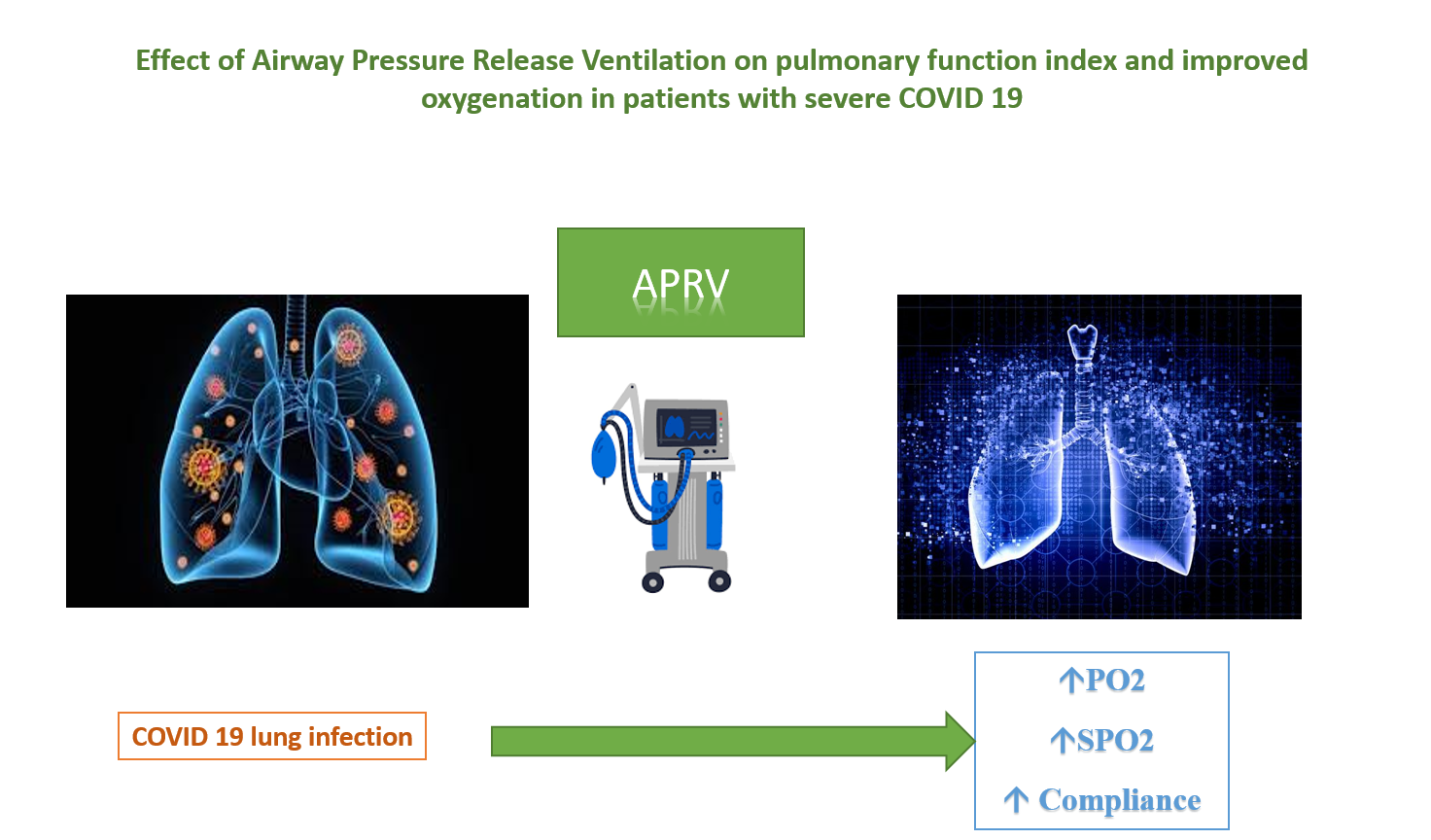
Background and purpose: The lack of specific therapeutic interventions for COVID-19 has compelled clinicians to rely on supportive measures, including mechanical ventilation, in affected patients. This study aimed to assess the impact of Airway Pressure Release Ventilation (APRV) on pulmonary parameters and arterial oxygenation in patients with severe COVID-19.
Materials and methods: In this before-and-after interventional study, 67 patients with severe or critical COVID-19 admitted to Ali Ibn Abi Talib Hospital, Rafsanjan, in 2021 were enrolled using a census sampling method. Baseline pulmonary parameters, including lung compliance, plateau pressure (P_plateau), peak airway pressure (P_peak), and driving pressure, were recorded from the ventilator. Arterial blood gas (ABG) parameters, including PaO₂, SpO₂, pH, PaCO₂, and HCO₃⁻, were also measured. The ventilator mode was then switched to APRV for a 6-hour period, after which pulmonary parameters and ABG measurements were reassessed. Data were analyzed using SPSS version 24, and paired t-tests were performed with a significance threshold of 0.05.
Results: The mean age of patients was 66.9 ± 17.5 years, and 53.7% (36 patients) were male. Mean PaO₂ increased significantly from 42.9 ± 15.7 mmHg to 61.4 ± 28.0 mmHg (P < 0.001), SpO₂ from 72.6 ± 13.4% to 88.1 ± 9.4% (P< 0.001), and PaCO₂ from 43.8 ± 12.4 mmHg to 47.8 ± 15.8 mmHg (P < 0.001). Pulmonary parameters, including lung compliance, plateau pressure (P_plateau), peak airway pressure (P_peak), and driving pressure, also showed statistically significant improvements after APRV (all P < 0.001).
Conclusion: The findings of this study indicate that APRV significantly enhances pulmonary mechanics and arterial oxygenation in patients with severe COVID-19. The benefits of this ventilation strategy are particularly pronounced in older patients and those with extensive pulmonary involvement on CT imaging.
Materials and methods: In this before-and-after interventional study, 67 patients with severe or critical COVID-19 admitted to Ali Ibn Abi Talib Hospital, Rafsanjan, in 2021 were enrolled using a census sampling method. Baseline pulmonary parameters, including lung compliance, plateau pressure (P_plateau), peak airway pressure (P_peak), and driving pressure, were recorded from the ventilator. Arterial blood gas (ABG) parameters, including PaO₂, SpO₂, pH, PaCO₂, and HCO₃⁻, were also measured. The ventilator mode was then switched to APRV for a 6-hour period, after which pulmonary parameters and ABG measurements were reassessed. Data were analyzed using SPSS version 24, and paired t-tests were performed with a significance threshold of 0.05.
Results: The mean age of patients was 66.9 ± 17.5 years, and 53.7% (36 patients) were male. Mean PaO₂ increased significantly from 42.9 ± 15.7 mmHg to 61.4 ± 28.0 mmHg (P < 0.001), SpO₂ from 72.6 ± 13.4% to 88.1 ± 9.4% (P< 0.001), and PaCO₂ from 43.8 ± 12.4 mmHg to 47.8 ± 15.8 mmHg (P < 0.001). Pulmonary parameters, including lung compliance, plateau pressure (P_plateau), peak airway pressure (P_peak), and driving pressure, also showed statistically significant improvements after APRV (all P < 0.001).
Conclusion: The findings of this study indicate that APRV significantly enhances pulmonary mechanics and arterial oxygenation in patients with severe COVID-19. The benefits of this ventilation strategy are particularly pronounced in older patients and those with extensive pulmonary involvement on CT imaging.
Keywords: COVID-19, Respiration, Artificial, Continuous Positive Airway Pressure, Pulmonary Function Index
Type of Study: Research(Original) |
Subject:
anesthesia
Send email to the article author
| Rights and permissions | |
 |
This work is licensed under a Creative Commons Attribution-NonCommercial 4.0 International License. |

Articles Copyright © The Author(s). Owned by Mazandaran University of Medical Sciences.
Contact Us
Address: Journal Office, Building No. 2, Mazandaran University of Medical Sciences, Moallem Square, Sari.Tel: +98 (011)34484874 Postal code: 48175-866 E-Mail: jmums@mazums.ac.ir Telefax: +98 (011)33262679
