

Volume 36, Issue 260 (9-2026)
J Mazandaran Univ Med Sci 2026, 36(260): 302-315 |
Back to browse issues page



Download citation:
BibTeX | RIS | EndNote | Medlars | ProCite | Reference Manager | RefWorks
Send citation to:


BibTeX | RIS | EndNote | Medlars | ProCite | Reference Manager | RefWorks
Send citation to:
Samaneh D, Andrawa H, Jabari A. Physicochemical and Microbiological Quality of Drinking Water from Water Coolers: A Narrative Review. J Mazandaran Univ Med Sci 2026; 36 (260) :302-315
URL: http://jmums.mazums.ac.ir/article-1-22969-en.html
URL: http://jmums.mazums.ac.ir/article-1-22969-en.html
Physicochemical and Microbiological Quality of Drinking Water from Water Coolers: A Narrative Review


Abstract: (26 Views)
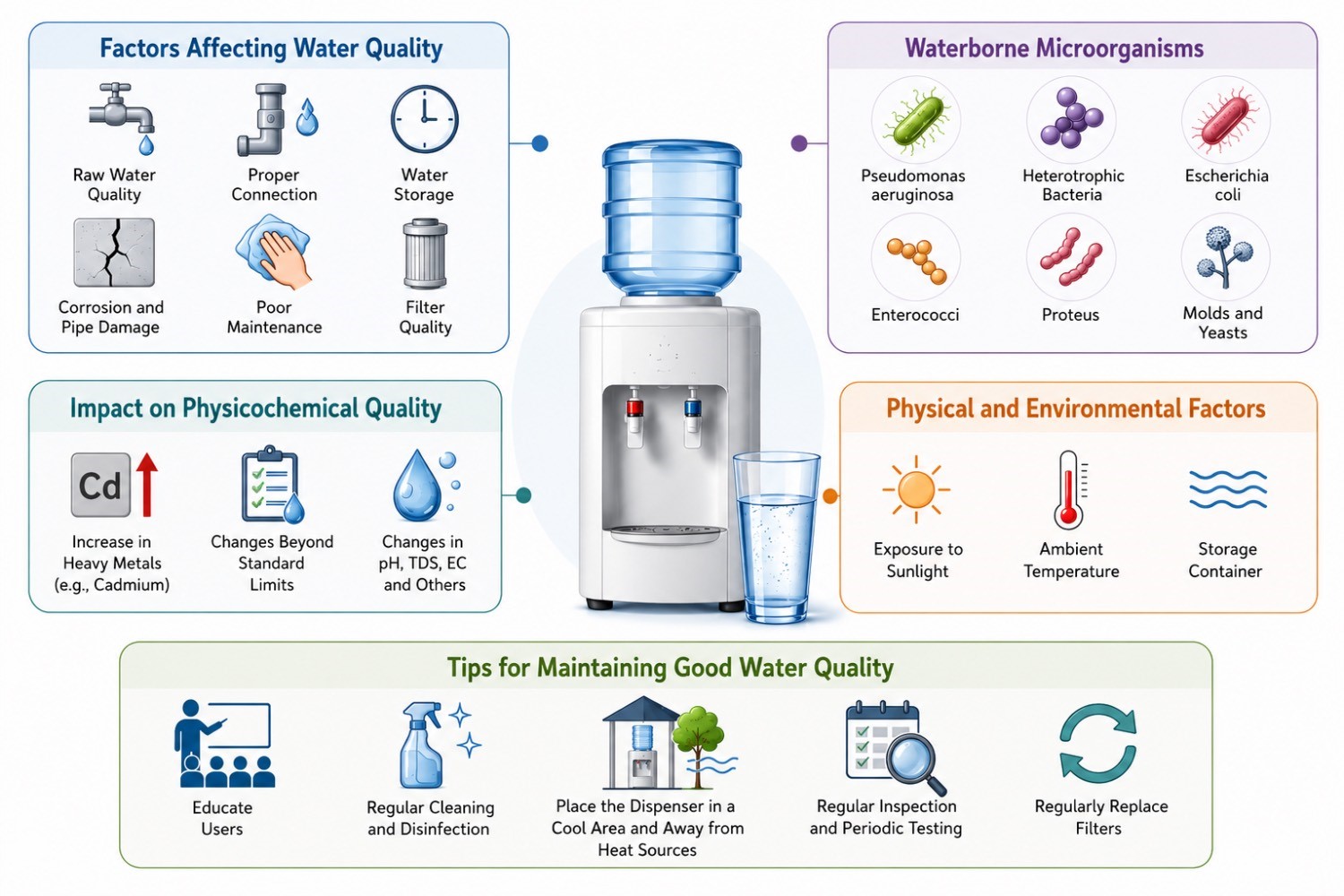
Background and purpose: Understanding waterborne pathogens and their routes of transmission is important, particularly in relation to water coolers, which are widely used during warm seasons. The design of these devices can promote the formation of biofilms and the growth of pathogenic microorganisms, while the materials used in their construction may also affect water quality. This study aimed to comprehensively review the physicochemical and microbiological quality of water dispensed from water coolers. This narrative review involved searches of Google Scholar, ScienceDirect, PubMed, and SID using relevant Persian and English keywords. Articles published up to 30 September 2025 were reviewed. The findings indicated that water coolers may, over time, increase the concentrations of certain elements, such as cadmium, to levels exceeding permissible limits. However, physicochemical parameters, including pH, electrical conductivity, total dissolved solids, and hardness, as well as concentrations of bicarbonate, sodium, chloride, sulfate, and nitrite, were generally within the standards established by Iranian authorities and the World Health Organization (WHO). With regard to microbiological quality, water collected from the outlets was reported to contain microorganisms, including Pseudomonas aeruginosa, heterotrophic bacteria, Escherichia coli, Enterococcus spp., Proteus spp., molds and yeasts, and coliforms. Factors associated with contamination included the quality of the incoming water supply, improper connection to the plumbing system, water stagnation within the tank, cracks in the device housing, inadequate hygiene, filter quality, tank material, and exposure to direct sunlight. Measures to improve the quality of water from water coolers include training personnel in appropriate cleaning and disinfection procedures, installing and maintaining devices in shaded, well-ventilated locations away from direct sunlight, conducting regular inspections, and periodically replacing plastic components that come into contact with water. Implementing these measures may help reduce potential health risks and protect public health.
Type of Study: Review |
Subject:
Environmental Health
Send email to the article author
| Rights and permissions | |
 |
This work is licensed under a Creative Commons Attribution-NonCommercial 4.0 International License. |

Articles Copyright © The Author(s). Owned by Mazandaran University of Medical Sciences.
Contact Us
Address: Journal Office, Building No. 2, Mazandaran University of Medical Sciences, Moallem Square, Sari.Tel: +98 (011)34484874 Postal code: 48175-866 E-Mail: jmums@mazums.ac.ir Telefax: +98 (011)33262679
