

Volume 35, Issue 251 (12-2025)
J Mazandaran Univ Med Sci 2025, 35(251): 224-234 |
Back to browse issues page



Download citation:
BibTeX | RIS | EndNote | Medlars | ProCite | Reference Manager | RefWorks
Send citation to:


BibTeX | RIS | EndNote | Medlars | ProCite | Reference Manager | RefWorks
Send citation to:
Asadi Khalili H, Mogharabi-Manzari M, Khodashenas A. A Review of Exosomatherapy in the Treatment of Multiple Sclerosis. J Mazandaran Univ Med Sci 2025; 35 (251) :224-234
URL: http://jmums.mazums.ac.ir/article-1-22024-en.html
URL: http://jmums.mazums.ac.ir/article-1-22024-en.html


Abstract: (1342 Views)
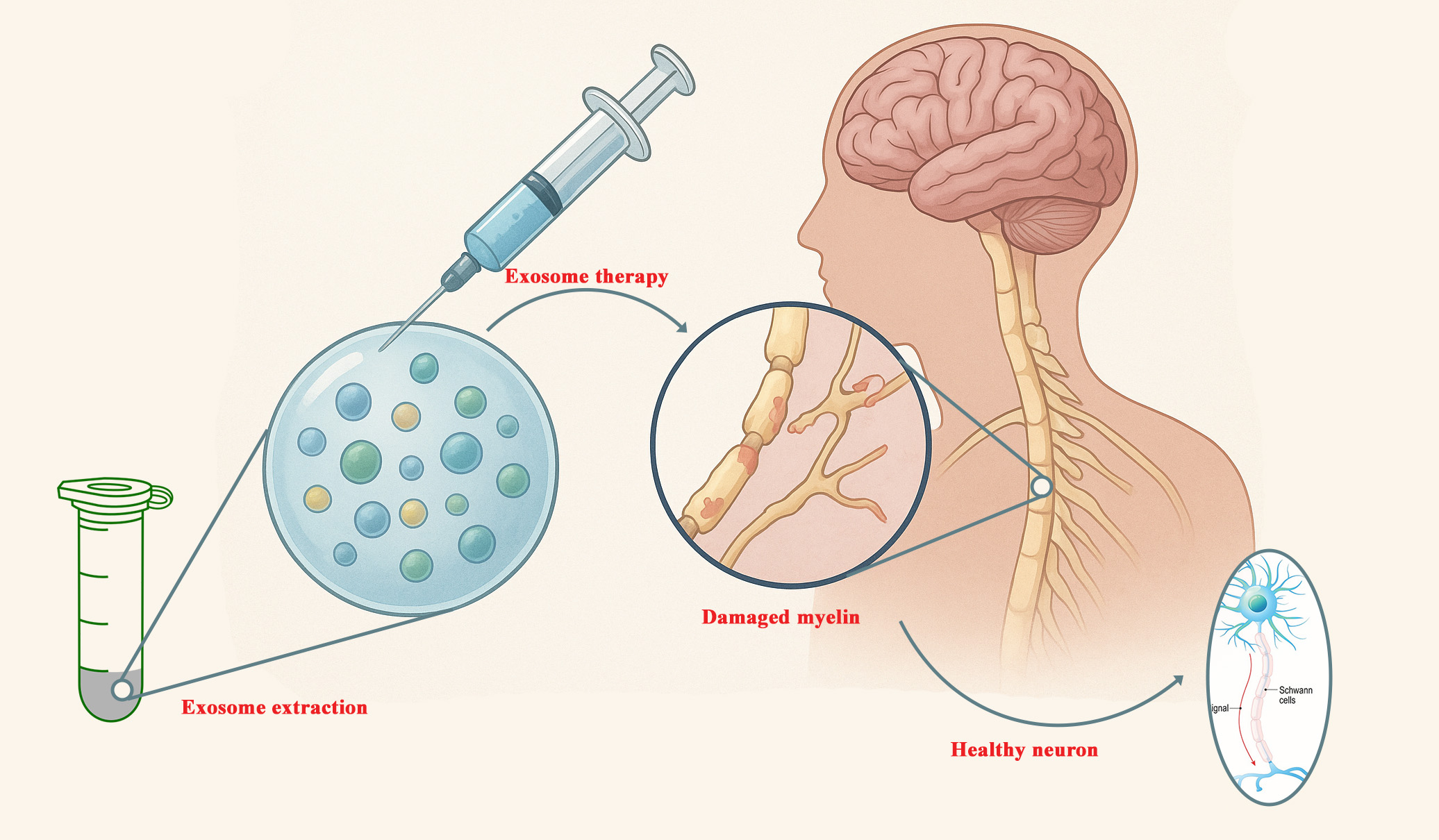
Multiple sclerosis (MS) is a chronic, progressive, and immune-mediated disorder of the central nervous system (CNS) characterized by inflammation, demyelination, and axonal injury, ultimately leading to neurodegeneration and irreversible disability. Despite extensive research, the precise pathophysiological mechanisms underlying MS remain incompletely understood. MS is now widely accepted that MS is a multifactorial and heterogeneous disease influenced by genetic susceptibility, environmental factors, and dysregulated immune responses. Complex and dynamic interactions among T cells, B cells, microglia, astrocytes, and exosomes play pivotal roles in the initiation, amplification, and persistence of inflammatory cascades that result in neuronal injury and loss of myelin integrity. Current therapeutic strategies rely primarily on disease-modifying therapies (DMTs) that modulate autoimmune activity, reduce relapse frequency, and delay long-term disability, including injectable agents such as interferon-β and glatiramer acetate; oral medications such as dimethyl fumarate, teriflunomide, and fingolimod; and monoclonal antibodies such as natalizumab, alemtuzumab, and ocrelizumab, which provide enhanced efficacy for selected patient groups. However, variability in individual treatment responses and safety concerns related to chronic immunosuppression, risks of infection and malignancy, remain major challenges. Recently, regenerative and cell-based therapies have emerged as promising alternatives, particularly for patients with refractory or progressive MS. Hematopoietic stem cell transplantation, mesenchymal stem cell therapy, and exosome-based interventions demonstrate remarkable potential for immune reconstitution, neuroprotection, and remyelination. This review provides a comprehensive overview of MS pathogenesis, summarizes advances in both established and emerging therapeutic modalities, and underscores the need to integrate immunomodulatory and neuroregenerative approaches to achieve durable remission and meaningful functional recovery.
Type of Study: Review |
Subject:
Biotechnology
Send email to the article author
| Rights and permissions | |
 |
This work is licensed under a Creative Commons Attribution-NonCommercial 4.0 International License. |

Articles Copyright © The Author(s). Owned by Mazandaran University of Medical Sciences.
Contact Us
Address: Journal Office, Building No. 2, Mazandaran University of Medical Sciences, Moallem Square, Sari.Tel: +98 (011)34484874 Postal code: 48175-866 E-Mail: jmums@mazums.ac.ir Telefax: +98 (011)33262679
