

Volume 36, Issue 258 (7-2026)
J Mazandaran Univ Med Sci 2026, 36(258): 26-39 |
Back to browse issues page



Download citation:
BibTeX | RIS | EndNote | Medlars | ProCite | Reference Manager | RefWorks
Send citation to:


BibTeX | RIS | EndNote | Medlars | ProCite | Reference Manager | RefWorks
Send citation to:
Barani A, Eslami C, Owraki F, Hashemi S P, Goli H R, Ebrahimzadeh M A. Green Synthesis of ZnO Nanoparticles Using Feijoa sellowiana Extract and Evaluation of Their Antibacterial Activity. J Mazandaran Univ Med Sci 2026; 36 (258) :26-39
URL: http://jmums.mazums.ac.ir/article-1-22050-en.html
URL: http://jmums.mazums.ac.ir/article-1-22050-en.html
Amin Barani 
 , Cyrus Eslami , Fatemeh Owraki , Seyedeh Parnia Hashemi , Hamid Reza Goli , Mohammad Ali Ebrahimzadeh
, Cyrus Eslami , Fatemeh Owraki , Seyedeh Parnia Hashemi , Hamid Reza Goli , Mohammad Ali Ebrahimzadeh
Abstract: (753 Views)
Background and purpose: In recent years, the synthesis of metal nanoparticles has attracted considerable attention because of their unique physicochemical properties and broad range of applications. Extensive studies have focused on the synthesis of zinc oxide nanoparticles using chemical methods. However, these methods often involve chemical compounds and organic solvents, which may have toxic effects on humans and the environment. Phytochemicals offer an environmentally friendly alternative to conventional chemical reagents for nanoparticle synthesis. Plant extracts are rich in antioxidant compounds that act as both reducing and stabilizing agents.
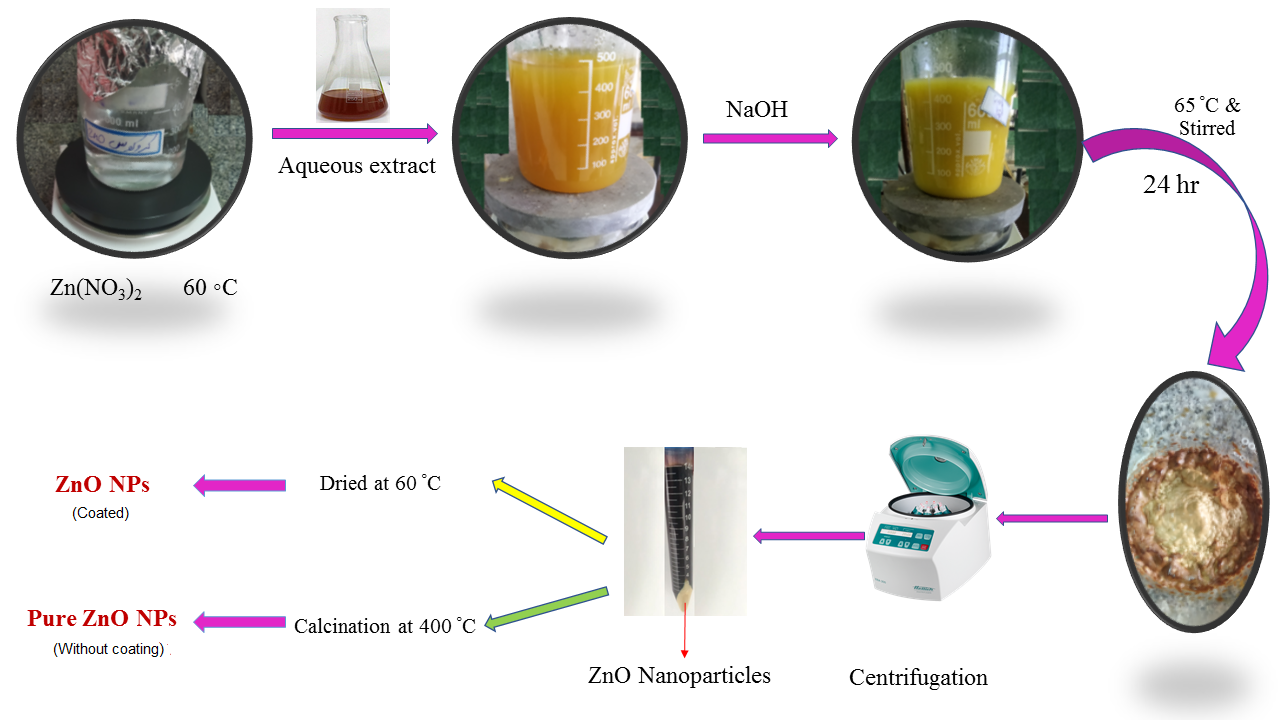
Materials and methods: In this experimental research, an aqueous extract of Feijoa sellowiana (Acca sellowiana) was used for the green synthesis of zinc oxide nanoparticles (ZnONPs). The formation of these nanoparticles was confirmed by energy-dispersive X-ray spectroscopy (EDX), X-ray diffraction (XRD), and ultraviolet-visible (UV-Vis) spectroscopy, while their morphology was characterized using scanning electron microscopy (SEM) coupled with EDX. To evaluate the antibacterial activity of the synthesized nanoparticles, several ciprofloxacin-sensitive and ciprofloxacin-resistant bacterial strains were used. Ciprofloxacin served as the positive control, and the minimum inhibitory concentration (MIC) and minimum bactericidal concentration (MBC) of the nanoparticles were determined.
Results: SEM analysis demonstrated that the synthesized nanoparticles exhibited a spherical morphology with particle sizes ranging from approximately 21 to 46 nm. UV-Vis spectroscopy revealed an absorption peak at approximately 370 nm, confirming the successful synthesis of ZnONPs using the plant extract. X-ray diffraction (XRD) analysis confirmed the crystalline structure and phase purity of the synthesized ZnO nanoparticles. Among the ciprofloxacin-sensitive strains, the strongest antibacterial activity was observed against Staphylococcus aureus, with an MIC of 10.5 μg/mL. Among the ciprofloxacin-resistant strains, the highest activity was observed against Escherichia coli, with an MIC of 21 μg/mL.
Conclusion: The findings demonstrate that F. sellowiana extract is an effective reducing and stabilizing agent for the green synthesis of zinc oxide nanoparticles. Furthermore, the synthesized nanoparticles exhibited notable antibacterial activity, supporting their potential for the development of eco-friendly antimicrobial agents.
Materials and methods: In this experimental research, an aqueous extract of Feijoa sellowiana (Acca sellowiana) was used for the green synthesis of zinc oxide nanoparticles (ZnONPs). The formation of these nanoparticles was confirmed by energy-dispersive X-ray spectroscopy (EDX), X-ray diffraction (XRD), and ultraviolet-visible (UV-Vis) spectroscopy, while their morphology was characterized using scanning electron microscopy (SEM) coupled with EDX. To evaluate the antibacterial activity of the synthesized nanoparticles, several ciprofloxacin-sensitive and ciprofloxacin-resistant bacterial strains were used. Ciprofloxacin served as the positive control, and the minimum inhibitory concentration (MIC) and minimum bactericidal concentration (MBC) of the nanoparticles were determined.
Results: SEM analysis demonstrated that the synthesized nanoparticles exhibited a spherical morphology with particle sizes ranging from approximately 21 to 46 nm. UV-Vis spectroscopy revealed an absorption peak at approximately 370 nm, confirming the successful synthesis of ZnONPs using the plant extract. X-ray diffraction (XRD) analysis confirmed the crystalline structure and phase purity of the synthesized ZnO nanoparticles. Among the ciprofloxacin-sensitive strains, the strongest antibacterial activity was observed against Staphylococcus aureus, with an MIC of 10.5 μg/mL. Among the ciprofloxacin-resistant strains, the highest activity was observed against Escherichia coli, with an MIC of 21 μg/mL.
Conclusion: The findings demonstrate that F. sellowiana extract is an effective reducing and stabilizing agent for the green synthesis of zinc oxide nanoparticles. Furthermore, the synthesized nanoparticles exhibited notable antibacterial activity, supporting their potential for the development of eco-friendly antimicrobial agents.
Keywords: Drug resistance, Zinc oxide nanoparticles, Green synthesis, Antibacterial activity, Feijoa sellowiana
Type of Study: Research(Original) |
Subject:
Medicinal Chemistry
Send email to the article author
| Rights and permissions | |
 |
This work is licensed under a Creative Commons Attribution-NonCommercial 4.0 International License. |

Articles Copyright © The Author(s). Owned by Mazandaran University of Medical Sciences.
Contact Us
Address: Journal Office, Building No. 2, Mazandaran University of Medical Sciences, Moallem Square, Sari.Tel: +98 (011)34484874 Postal code: 48175-866 E-Mail: jmums@mazums.ac.ir Telefax: +98 (011)33262679
