


BibTeX | RIS | EndNote | Medlars | ProCite | Reference Manager | RefWorks
Send citation to:


URL: http://jmums.mazums.ac.ir/article-1-22056-en.html


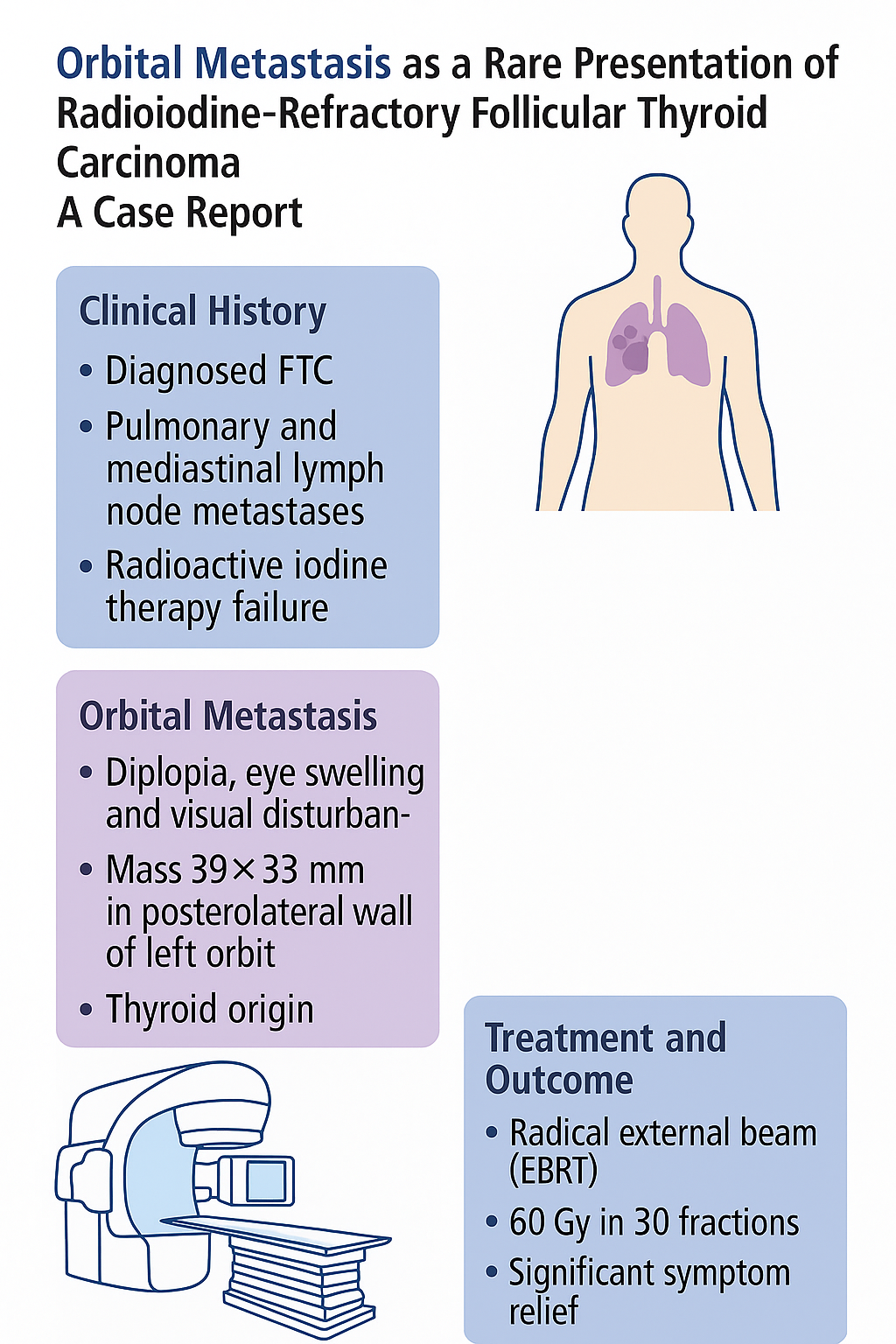
Follicular thyroid carcinoma (FTC) is the second most common differentiated thyroid carcinoma and typically spreads hematogenously, most often to the lungs and bones. Orbital metastasis, however, is an exceedingly rare presentation, with only a limited number of cases documented in the literature. We describe a 51-year-old male with a history of total thyroidectomy and radioactive iodine therapy, who initially developed pulmonary metastases and later presented with progressive ocular symptoms including diplopia, blurred vision, and orbital swelling. Magnetic resonance imaging revealed a lobulated mass in the left orbit, and histopathological evaluation with immunohistochemistry confirmed its thyroid origin. This case emphasizes the importance of recognizing orbital metastasis as a rare but clinically significant manifestation of FTC, which may arise years after the initial diagnosis. Awareness of such unusual presentations is essential for timely diagnosis and optimal patient management.
| Rights and permissions | |
 |
This work is licensed under a Creative Commons Attribution-NonCommercial 4.0 International License. |

Articles Copyright © The Author(s). Owned by Mazandaran University of Medical Sciences.
Contact Us
Address: Journal Office, Building No. 2, Mazandaran University of Medical Sciences, Moallem Square, Sari.Tel: +98 (011)34484874 Postal code: 48175-866 E-Mail: jmums@mazums.ac.ir Telefax: +98 (011)33262679
