

Volume 36, Issue 258 (7-2026)
J Mazandaran Univ Med Sci 2026, 36(258): 184-199 |
Back to browse issues page



Download citation:
BibTeX | RIS | EndNote | Medlars | ProCite | Reference Manager | RefWorks
Send citation to:


BibTeX | RIS | EndNote | Medlars | ProCite | Reference Manager | RefWorks
Send citation to:
Rahimzadeh G, Rezai M S. The Role of the Gut Phageome in Gut Microbiome Regulation and Human Health: A Narrative Review. J Mazandaran Univ Med Sci 2026; 36 (258) :184-199
URL: http://jmums.mazums.ac.ir/article-1-22924-en.html
URL: http://jmums.mazums.ac.ir/article-1-22924-en.html


Abstract: (704 Views)
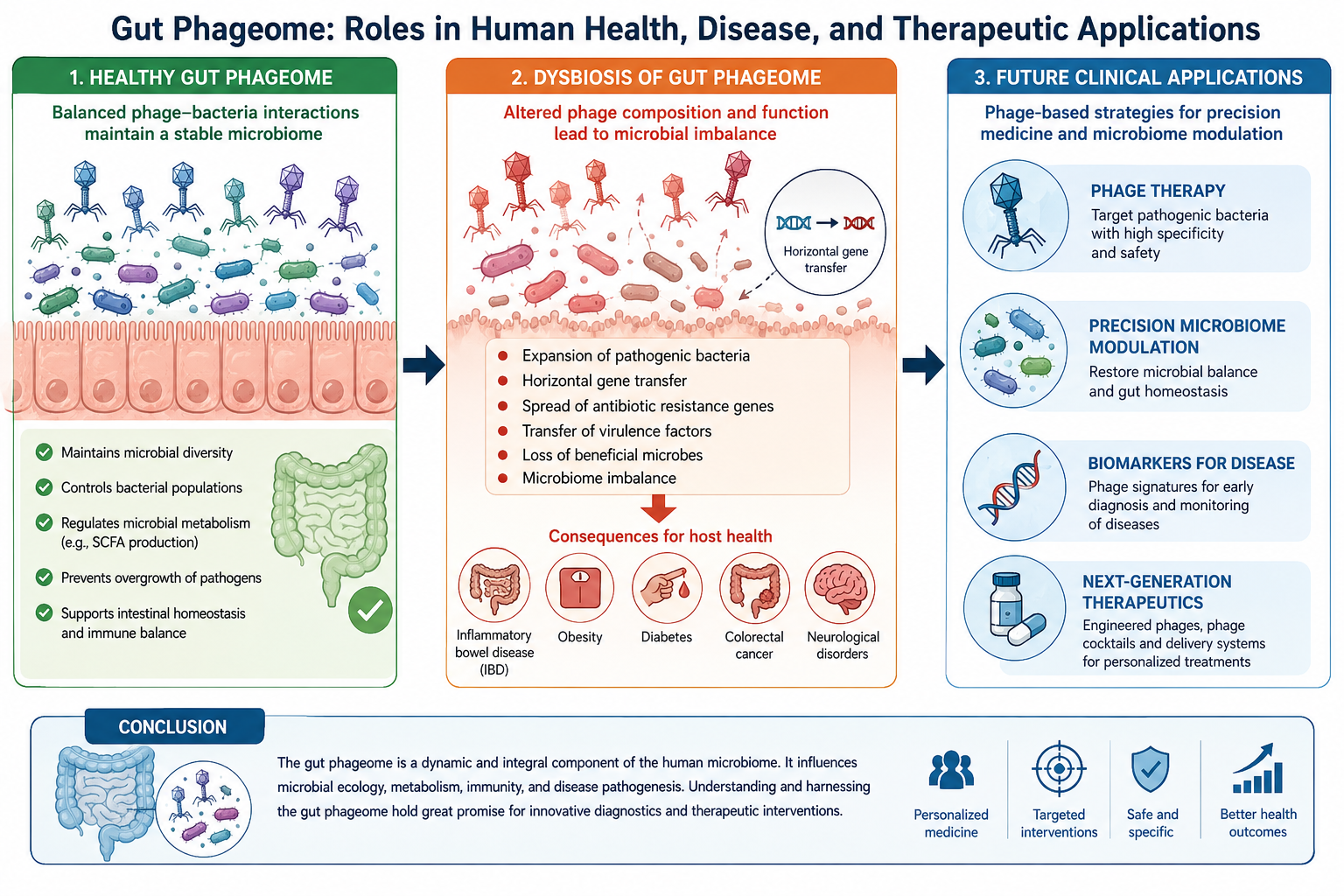
Background and purpose: The human gut microbiome is a complex and dynamic ecosystem composed of bacteria, viruses, fungi, and archaea that plays a fundamental role in metabolism, immune regulation, and colonization resistance. Although the bacterial component has been extensively investigated over the past two decades, the viral component, particularly the gut phageome, remains comparatively understudied. Emerging evidence suggests that bacteriophages regulate microbial communities, facilitate horizontal gene transfer, modulate metabolic functions, and influence host-microbe interactions, thereby contributing to both health and disease. This narrative review aimed to provide a comprehensive overview of the role of the gut phageome in microbiome regulation and its implications for human health.
Materials and methods: A narrative review was conducted through a systematic search of studies published between 2000 and 2025 in PubMed, Scopus, Web of Science, and Google Scholar. Eligible studies were reviewed and categorized based on the roles of bacteriophages in shaping gut microbial composition, contributing to dysbiosis and disease, and their therapeutic potential, particularly in phage therapy.
Results: Gut bacteriophages influence intestinal ecology through their lytic and lysogenic life cycles, horizontal gene transfer, modulation of bacterial fitness, and carriage of auxiliary metabolic genes. These mechanisms may affect short-chain fatty acid production, bile acid metabolism, immune signaling, intestinal barrier integrity, and resistance to pathogenic colonization. Alterations in the gut phageome have been associated with inflammatory bowel disease, enteric infections, obesity, and type 2 diabetes. However, most available evidence remains observational or preclinical, and causal relationships have yet to be firmly established.
Conclusion: The gut phageome is an active and influential component of the intestinal microbiome that may contribute to microbial homeostasis, immune regulation, and disease pathogenesis. Translating these findings into precision microbiome-based therapies will require well-designed randomized controlled clinical trials, standardized viromics methodologies, and rigorous evaluation of the safety and efficacy of phage-based interventions.
Materials and methods: A narrative review was conducted through a systematic search of studies published between 2000 and 2025 in PubMed, Scopus, Web of Science, and Google Scholar. Eligible studies were reviewed and categorized based on the roles of bacteriophages in shaping gut microbial composition, contributing to dysbiosis and disease, and their therapeutic potential, particularly in phage therapy.
Results: Gut bacteriophages influence intestinal ecology through their lytic and lysogenic life cycles, horizontal gene transfer, modulation of bacterial fitness, and carriage of auxiliary metabolic genes. These mechanisms may affect short-chain fatty acid production, bile acid metabolism, immune signaling, intestinal barrier integrity, and resistance to pathogenic colonization. Alterations in the gut phageome have been associated with inflammatory bowel disease, enteric infections, obesity, and type 2 diabetes. However, most available evidence remains observational or preclinical, and causal relationships have yet to be firmly established.
Conclusion: The gut phageome is an active and influential component of the intestinal microbiome that may contribute to microbial homeostasis, immune regulation, and disease pathogenesis. Translating these findings into precision microbiome-based therapies will require well-designed randomized controlled clinical trials, standardized viromics methodologies, and rigorous evaluation of the safety and efficacy of phage-based interventions.
Keywords: Phageome, gut microbiota, human health, phage therapy, infectious diseases, immune system, metabolic diseases
Type of Study: Review |
Subject:
Microbiology
Send email to the article author
| Rights and permissions | |
 |
This work is licensed under a Creative Commons Attribution-NonCommercial 4.0 International License. |

Articles Copyright © The Author(s). Owned by Mazandaran University of Medical Sciences.
Contact Us
Address: Journal Office, Building No. 2, Mazandaran University of Medical Sciences, Moallem Square, Sari.Tel: +98 (011)34484874 Postal code: 48175-866 E-Mail: jmums@mazums.ac.ir Telefax: +98 (011)33262679
