

Volume 36, Issue 263 (11-2026)
J Mazandaran Univ Med Sci 2026, 36(263): 195-207 |
Back to browse issues page



Download citation:
BibTeX | RIS | EndNote | Medlars | ProCite | Reference Manager | RefWorks
Send citation to:


BibTeX | RIS | EndNote | Medlars | ProCite | Reference Manager | RefWorks
Send citation to:
Ebrahimi A, Bakhteh A, Heydarpour F, Jalilian N, Kamravamanesh M. Attitudes Toward Childbearing and Associated Demographic and Obstetric Factors Among Women with a History of High-Risk Fetal Screening Results. , J Mazandaran Univ Med Sci. 2026; 36 (263) :195-207
URL: http://jmums.mazums.ac.ir/article-1-23241-en.html
URL: http://jmums.mazums.ac.ir/article-1-23241-en.html


Abstract: (16 Views)
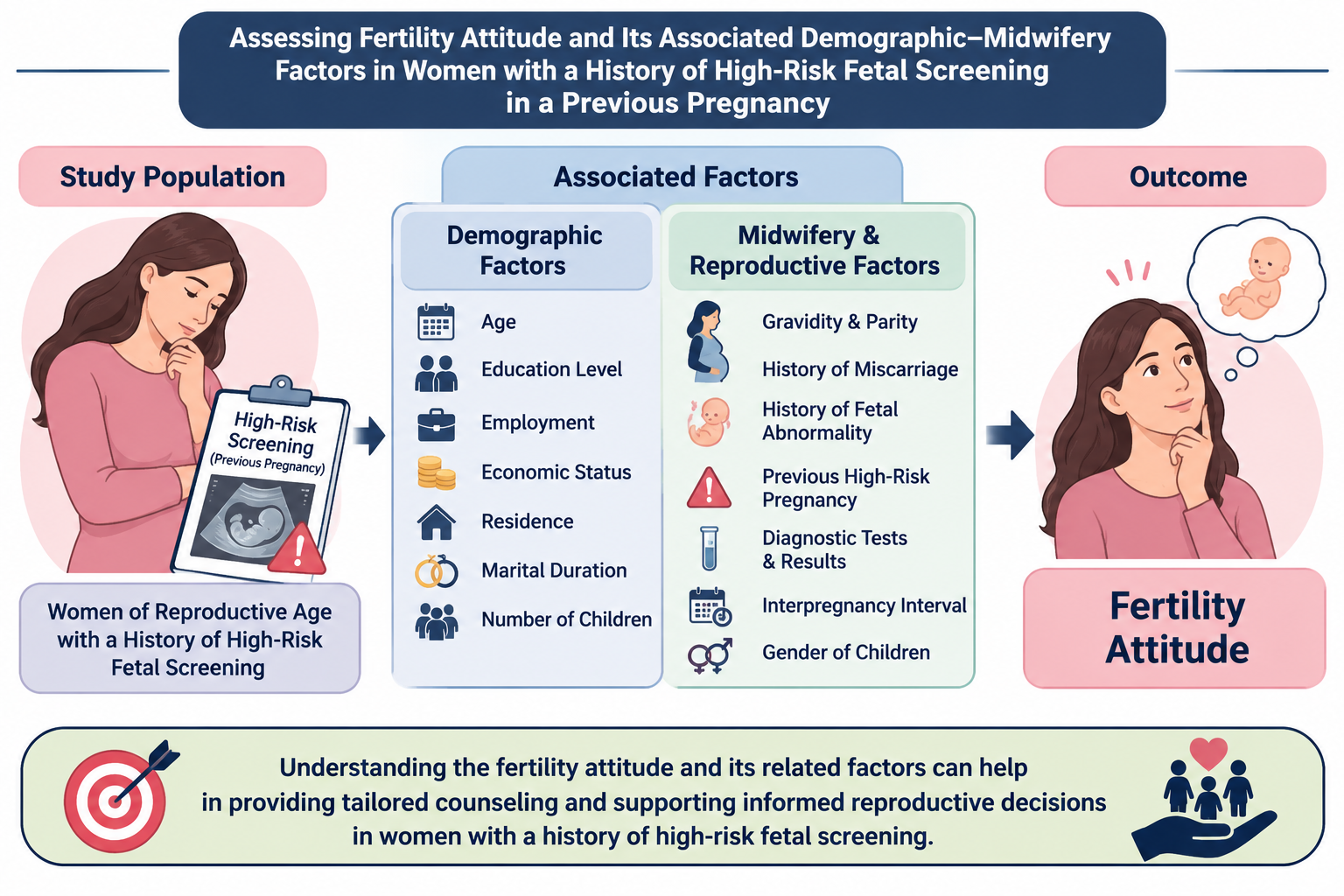
Background and purpose: Attitudes toward childbearing are influenced by individual and socioeconomic factors, as well as medical experiences. These attitudes may be particularly complex among women who have received high-risk results from fetal health screening in a previous pregnancy. This study aimed to assess attitudes toward childbearing and their associated factors among women with a history of high-risk fetal screening results in a previous pregnancy.
Materials and methods: A descriptive cross-sectional study was conducted from March 2023 to March 2024 among 213 women with a history of high-risk fetal screening results in a previous pregnancy who attended genetic diagnostics laboratory – central laboratory of Kermanshah city, Iran. Census sampling was employed. Demographic and obstetric data were extracted from medical records, and participants completed the Attitudes Toward Fertility and Childbearing Scale (AFCS; 23 items; score range: 23-115). Data were analysed using SPSS, including Spearman's rank correlation and multivariable linear regression analyses.
Results: The mean AFCS score was 82.45 ± 8.12. In the multivariable linear regression model, a positive amniocentesis result was significantly associated with lower childbearing attitude scores (B = -9.64, SE = 3.35, P < 0.001). The regression model was statistically significant (F = 12.45, P < 0.001) and explained 20.7% of the variance in attitudes toward childbearing (R² = 0.207). Other variables, including monthly income, duration of marriage, number of pregnancies, number of deliveries and number of children, were not statistically significant in the final model.
Conclusion: Attitudes toward childbearing among women with a history of high-risk fetal screening results are influenced by a range of individual, socioeconomic and medical factors. The findings highlight the potential impact of stressful medical experiences, particularly positive amniocentesis results, on women's attitudes toward future childbearing. Providing appropriate psychological support and improving the quality of counselling during the screening process may help women make informed reproductive decisions.
Type of Study: Research(Original) |
Subject:
Midwifery
| Rights and permissions | |
 |
This work is licensed under a Creative Commons Attribution-NonCommercial 4.0 International License. |

Articles Copyright © The Author(s). Owned by Mazandaran University of Medical Sciences.
Contact Us
Address: Journal Office, Building No. 2, Mazandaran University of Medical Sciences, Moallem Square, Sari.Tel: +98 (011)34484874 Postal code: 48175-866 E-Mail: jmums@mazums.ac.ir Telefax: +98 (011)33262679
